A Turning Point in Middle East History as Iran’s Supreme Leader Dies in Airstrikes
- Mar 1
- 2 min read
1 March 2026
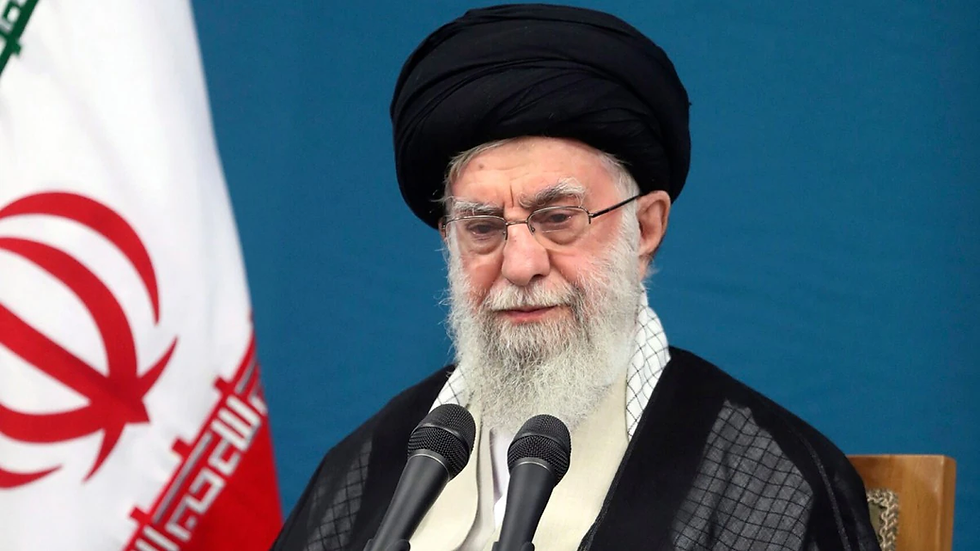
Iran’s political landscape was shaken to its core when state media confirmed that Ayatollah Ali Khamenei, the country’s long-time supreme leader, had been killed following coordinated airstrikes conducted by United States and Israeli forces. The announcement, made on March 1, came after one of the most dramatic escalations of conflict in the region in decades, with Iran’s top leadership and several senior figures targeted in what world leaders described as an unprecedented military operation.
Khamenei, 86, had guided the Islamic Republic since 1989, succeeding the founder of the system, Ayatollah Ruhollah Khomeini. Under his authority, Iran became a formidable regional power, supporting allied militias and shaping conflict across the Middle East. His governance combined rigid internal control with an assertive foreign policy that brought Tehran into repeated confrontation with Western nations, particularly over its nuclear program and support for proxy groups. His death marks the end of an era in Iranian politics and presents one of the most complex succession challenges the country has faced in its modern history.
The strikes that killed Khamenei and other high-ranking officials also hit key Iranian military sites. Reports suggest that the operation involved extensive planning and intelligence cooperation, and struck not only the supreme leader’s office but also several high-level command centers, dealing a significant blow to Iran’s military leadership structure. In addition to the leader’s death, members of his immediate family and other senior commanders were reported killed. His wife, Mansoureh Khojasteh Bagherzadeh, succumbed to injuries days later, further deepening the personal toll of the attack on Iran’s leadership.
In response to Khamenei’s death, Iran declared a 40-day period of national mourning, and an interim leadership council was appointed to guide the country through the immediate aftermath. At the same time protests and mourning have rippled across Shia communities in countries such as Iraq, Pakistan and India, where mourners gathered to express both grief and solidarity. At home in Iran, crowds have been seen both celebrating and demonstrating, reflecting deep and polarized sentiments among the population about Khamenei’s legacy.
The geopolitical response has been swift and varied. The United States and Israeli leaders defended the operation as a necessary action against what they described as a destabilizing force in the region, while many international leaders condemned the attack as a violation of sovereignty and a dangerous escalation. Global reactions have underscored the fragility of the current moment, with calls for restraint and fears of broader conflict echoing in capitals from Europe to Asia.
Iran’s strategic position in the Middle East, including its influence over allied militias in Lebanon, Yemen and Syria, means that Khamenei’s death has heightened concerns about the future trajectory of regional tensions. Intelligence assessments warn of possible retaliatory acts, including targeted strikes and cyber attacks, which could further complicate international relations and security dynamics.
As Iran confronts the challenge of selecting a successor to Khamenei, a process governed by clerical authorities but made more uncertain by the deaths of many senior figures in the strike, the world watches closely. The outcome of this transition will have profound implications not only for Iran’s internal politics but also for peace and stability across the broader Middle East region.


Comments