China Urges Lawful and Balanced Solutions as TikTok’s U.S. Deal Moves Forward
- Dec 25, 2025
- 4 min read
25 December 2025
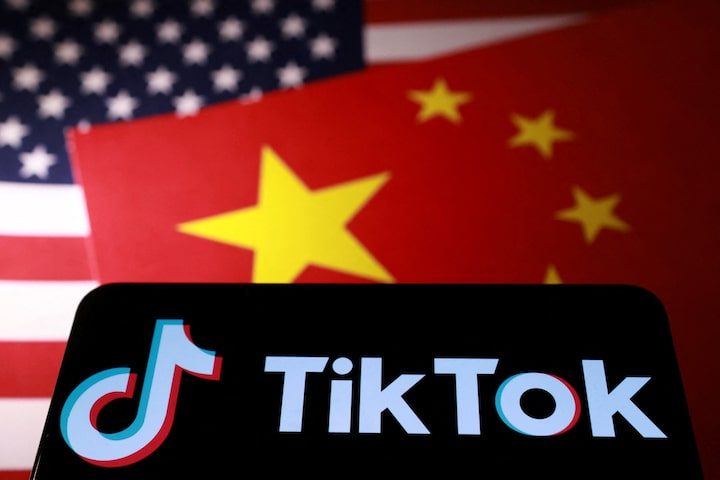
China has publicly urged companies at the center of a high-profile deal over TikTok’s U.S. operations to pursue outcomes that are lawful, balanced and respectful of Chinese regulations as negotiations accelerate toward a potential resolution of years of uncertainty for the wildly popular social media platform. The comments, made by a spokesperson for the Ministry of Commerce at a regular press briefing in Beijing, reflect Beijing’s cautious yet pragmatic approach to an issue that has become emblematic of broader tensions between China and the United States over technology, data security and global economic influence. At the same time, the remarks spotlight China’s desire to see its legal framework upheld even as Chinese enterprises navigate increasingly complex international deals.
The backdrop to the Chinese statement is the sprawling saga involving TikTok’s Chinese parent company ByteDance and its efforts to restructure the ownership of TikTok’s U.S. business to comply with American national security concerns. U.S. law passed in 2024 required ByteDance to divest significant control of TikTok’s U.S. operations or face a complete ban in the world’s largest digital advertising market. In response to that legal mandate, ByteDance in mid-December signed binding agreements with a group of investors led by American firms, including Oracle and private equity investor Silver Lake, to create a new U.S.-based joint venture that will assume operational control of TikTok in the United States. The transaction, widely seen as a major step toward clearing the regulatory hurdles that have hung over the platform for years, is expected to close in January 2026 if all approvals are secured.
In late December, commerce ministry spokesperson He Yongqian was asked about the hand-over of TikTok’s U.S. operations and responded by emphasizing China’s hope that companies involved would follow Chinese laws and regulations while balancing the interests of all parties. She also expressed hope that the U.S. government would work in concert with China by fulfilling its commitments and maintaining a fair, open, transparent and non-discriminatory business environment that allows Chinese companies to operate stably within the United States. These comments underscore China’s dual objective of complying with its internal legal requirements and advocating for reciprocal treatment of Chinese enterprises abroad, even as individual companies pursue commercial agreements.
The diplomatic dimension of this issue cannot be overstated. TikTok has long been at the intersection of technological innovation, national security concerns and geopolitical rivalry. U.S. officials have raised repeated alarms about the possibility that Chinese-sourced data or algorithmic technologies could be used in ways that pose security risks, concerns that drove the legislative mandate for divestiture. Beijing, for its part, has repeatedly maintained that Chinese firms should be treated fairly and that commercial negotiations should proceed under market norms and equal consultation. The commerce ministry’s recent statement aligns with this narrative, presenting China as supportive of lawful, reasoned solutions while implicitly countering any suggestions that commercial arrangements should be dictated unilaterally by foreign governments.
Experts observing the situation note that China’s insistence on lawful and balanced solutions is about more than just one company or one deal. TikTok’s predicament highlights the broader context of U.S.-China relations, where issues of technology transfer, intellectual property, data governance and cross-border investment are deeply interwoven with strategic competition. China’s call for a fair and transparent business environment resonates with concerns raised by other Chinese technology firms operating globally, many of which face heightened scrutiny in Western markets. By framing its position in terms of legal compliance and mutual respect, Beijing is signaling its intent to defend its companies’ interests while still engaging in the kind of international economic cooperation that underpins global markets.
For its part, TikTok and ByteDance have sought to reassure both U.S. and Chinese authorities that the planned restructuring will satisfy legal requirements in both countries. An internal memo seen by reporters detailing the binding agreements described plans for a new entity in which U.S. investors would hold a controlling stake and where data protection, algorithm security and content moderation would be managed in accordance with U.S. regulatory expectations. Oracle is slated to serve as a trusted technical partner responsible for auditing aspects of data handling and compliance, part of a broader strategy designed to alleviate concerns about foreign data access.
Yet even as the commercial deal advances, questions remain about the ultimate structure and governance of TikTok’s U.S. arm and whether it will satisfy the legal and political demands of both Washington and Beijing. Analysts have pointed out that compliance with Chinese law continues to be central to any agreement, and that China’s public statements reflect a desire to avoid setting precedents that could disadvantage its technology sector more broadly. China’s appeal for a balanced, law-compliant solution is therefore both a specific response to the TikTok situation and a strategic stance in ongoing negotiations with global partners.
The TikTok negotiations also illustrate the interconnected nature of modern global commerce, where technology platforms operate in multiple jurisdictions with differing legal frameworks and geopolitical priorities. China’s approach emphasizing lawful compliance, balanced outcomes and a fair business environment underscores the challenges multinational companies face as they try to bridge regulatory divides while preserving operational continuity. As the January deadline for the TikTok deal approaches, stakeholders on both sides of the Pacific will be watching closely to see whether this complex agreement can be finalized in a manner that satisfies legal requirements, commercial realities and the broader political considerations that have shaped this issue for years.



Comments