EU Extends Suspension of Retaliatory Tariffs to Salvage Trade Talks with the U.S.
- Jul 13, 2025
- 3 min read
13 July 2025
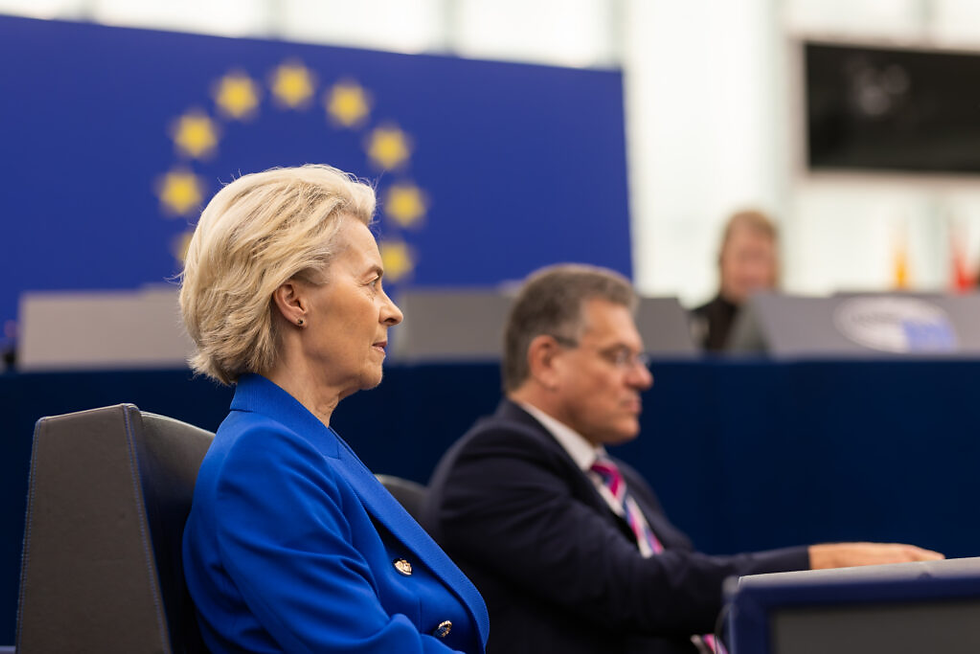
In Brussels on July 13, European Commission President Ursula von der Leyen announced that the EU would delay its planned counter-tariffs on U.S. goods until early August, offering a diplomatic pause in response to President Trump’s announcement of a potential 30 percent tariff on EU imports starting August 1. The message was clear: Europe remains committed to negotiations but stands ready to act if talks collapse.
Von der Leyen emphasized the EU’s “two-track” approach continuing dialogue while preparing contingency measures. A first package targeting €21 billion worth of U.S. goods, held in abeyance since April, and a larger second package of €72 billion are still prepared and could be activated swiftly, she said. Despite the pause, these countermeasures remain potent leverage in any failed negotiations.
Among member states, opinions diverged on how to proceed. France’s President Emmanuel Macron advocated for a resolute defence of EU interests, including the use of anti-coercion tools against U.S. economic pressure, while Germany’s Finance Minister Lars Klingbeil urged a pragmatic solution, warning that prolonged talks risks reputational damage. Klingbeil stressed that Europe must demonstrate unity even as it remains open to compromise.
The pause in retaliation sends a message that the EU favors diplomacy over escalation but only temporarily. Von der Leyen stressed that the delay does not undermine EU readiness: “We are fully prepared,” she declared, underlining that the bloc is not entering a phase of complacency but maintaining pressure in the background.
The context for this decision lies in months of tit-for-tat penalties. U.S. tariffs first targeted steel and aluminum at rates up to 50 percent in April, triggering an EU response. The EU suspensions bought time for talks but expired now only to be extended once more amid Trump’s looming 30 percent tariff threat.
While the clock ticks toward the August 1 deadline, the EU has also been advancing new trade relationships. Von der Leyen revealed progress on a trade agreement with Indonesia, part of a strategy to diversify EU trade and reduce dependency on a single market
Cadena SER.
Though member states rally around delay, cracks are visible. Some EU ambassadors met urgently on July 13 to discuss strategy ahead of an extraordinary trade minister meeting planned for July 14. The urgency reflects concern that the longer internal disagreements persist, the more time the U.S. has to act amid domestic trade policy cycles.
Industry voices are reacting with caution. France’s dairy sector warned that a 30 percent tariff would severely disrupt exports of cheese and wine, industries deeply integrated with U.S. markets. Germany, whose export portfolio includes high-value vehicles, pharmaceuticals, and machinery, totaling €161 billion in exports to the U.S. in 2024 has warned that unresolved tariffs could chip away at confidence on both sides of the Atlantic.
Within EU institutions, sentiment leans toward unity through measured action. The European Parliament’s trade committee chief, Bernd Lange, favors immediate countermeasures though more centrist voices lean toward patience to preserve diplomatic momentum.
From Washington, White House economic adviser Kevin Hassett suggested that tariff threats are intended to spark negotiations and that unresolved differences would lead to enforcement. The U.S. position leaves room for compromise but only against a backdrop of credible threats.
With roughly two and a half weeks left, all eyes are on the negotiation outcomes. Will Brussels secure concessions? Or will Brussels unleash its €93 billion package as planned? The month ahead will test EU cohesion and its ability to safeguard jobs in key markets while charting a sustainable trade path amid rising protectionist tides.


Comments