Hongkong Land Signals a Market Turning Point in Hong Kong’s Central Office Sector
- Jul 29, 2025
- 4 min read
29 July 2025
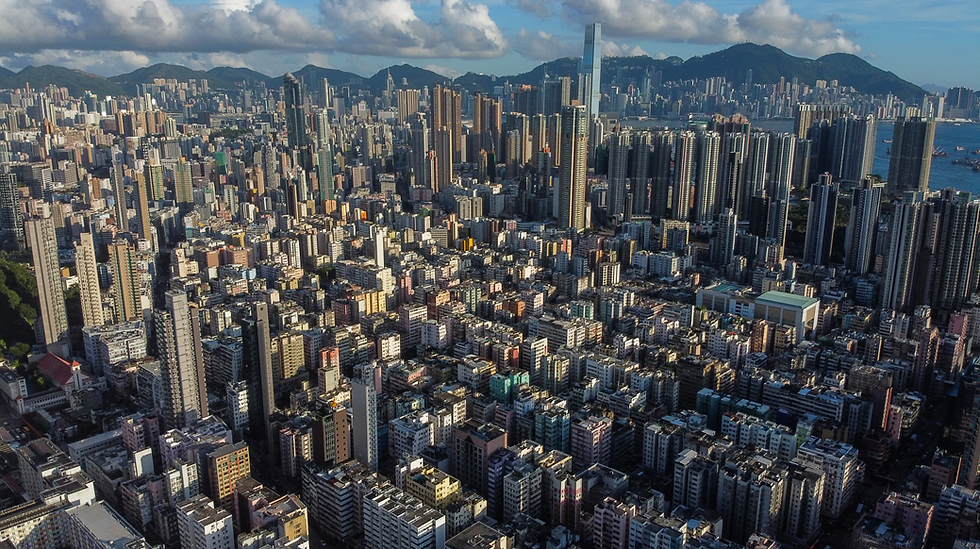
Hongkong Land, the iconic property developer at the core of Hong Kong’s Central district, revealed on July 29, 2025 that the beleaguered office market may finally be stabilizing. For the first time since 2018, its flagship high-end portfolio posted steady valuations, suggesting the long decline that has eroded market confidence might be approaching its nadir. The firm’s first-half underlying profit surged to $297 million, a sharp reversal from a $7 million loss in the same period a year ago, underlining a renewed sense of momentum in the prime commercial real estate space.
Central to the turnaround narrative was the moderate easing in vacancy rates. In the second quarter, vacancies in Hongkong Land’s Central district holdings slipped slightly to 6.9 percent from 7.1 percent six months earlier. Although still elevated by historical standards, the trend points to increased tenant demand and greater market resilience, particularly for premier-grade office space. More encouragingly, rents appear to have stabilized after steep declines, with second-quarter rental levels holding steady. Demand from capital markets buoyed activity across Central’s core, where high-caliber firms continue to seek premium real estate.
In commentary to Reuters, Chief Financial Officer Craig Beattie described the current period as a possible inflection point. He emphasized that while rents remain under pressure having fallen about 7.8 percent year-on-year in the first half, the once precipitous drop in valuations is showing signs of bottoming. Analysts watching the broader market agree that premium space could lead the recovery even as the wider Central office ecosystem continues to sort through oversupply and external headwinds.
The profit rebound was also driven by fewer provisions in mainland China and stronger residential performance from the company’s housing segment. However, Hongkong Land cautioned that profit margins in its mainland build-to-sell division are expected to remain constrained in the second half of the year owing to China’s persistent housing market challenges. The company’s refreshed strategic direction, announced in October 2024, positions investment properties in gateway Asian cities at the heart of its growth vision. In April it completed a landmark HK$6.3 billion ($812 million) sale of the top floors and retail space of its One Exchange Square tower to the Hong Kong stock exchange. Beattie confirmed there are no plans to divest further parts of its Central portfolio, but added that the group is exploring expansion opportunities in Singapore, Tokyo, Seoul, and Sydney.
A deeper look at the interim financials revealed that underlying profit per share rose to US¢13.51, up from a loss per share of US¢0.31 a year ago. Net asset value per share increased slightly as well, while net debt edged down to $4.92 billion. To strengthen its cash position and reduce leverage, the company initiated a $200 million share buyback program, with approximately two-thirds already executed by late July. These measures align with Hongkong Land’s broader Strategic Vision 2035, which aims to recycle US$4 billion in capital by the end of 2027 to fund strategic investments in ultra-premium real estate.
Despite positive signs, Hongkong Land was cautious about near-term rental trends and broader macroeconomic uncertainty. While prime properties showed resilience, average rents still reflected downward pressure, and reversal in rental levels is not expected over the next several quarters. The firm also warned that mainland China will produce slimmer margins in residential sales going forward. Nonetheless, demand for premium space in Singapore remains strong, with vacancies below 2 percent and upward rental momentum noticeable in recent months.
Taken together, these developments suggest a shifting sentiment in Hong Kong’s commercial property market. For years, the narrative was dominated by double-digit vacancy rates, plunging rents, and anxious capital recycling. Now, with asset values showing stability and occupier demand returning especially among high-end tenants a gradual re-rating of confidence is beginning to take shape.
For investors and market watchers alike the Hongkong Land interim results offer both tangible metrics and deeper insights. The stability of its Central portfolio is a key data point indicating possible market bottoming. Profit and cash flow strength bolster its balance sheet, while strategic redirection toward investment-grade core assets in Asia reflects a disciplined long-term playbook.
Crucially, the firm’s decision to hold rather than break up its Central portfolio signals conviction in its core asset base. At the same time, proactive capital recycling evidenced by the HKEX sale and buyback program suggests management is intent on optimizing asset mix and financial flexibility ahead of expansion into new markets.
The company’s leadership believes that continuing soft rental reversions, when combined with better capital market activity and selective tenant demand, could reshape perceptions of risk. If premium Central office rents remain steady or improve modestly, it could catalyze broader sectoral recovery and reassure stakeholders that Central Hong Kong is back in business.
In a broader context, the turnaround at Hongkong Land may presage a wider stabilization across Hong Kong’s office market, a sector that had lost more than half its value since its 2018 peak. For now the recovery is tentative, told in small cracks of growth and cautious optimism. But if vacancy rates continue to drop, values stop declining, and institutional appetite returns, then current signals could indeed mark the long-awaited inflection.
At the center of this story is a company emerging from years of correction with a clearer vision and steadier footing. Whether the broader market follows because of it or independently, Hongkong Land’s half-year report stands as a milestone: an iconic developer acknowledging that it may no longer be plummeting.


Comments