New York City Targets $100 Million in School Procurement Savings

New York City is overhauling the way its public-school system buys goods and services, with the administration projecting more than $100 million in savings over the current and following fiscal years. The plan reaches beyond a single contract: it calls for competitive rebidding, tighter contract management, updated technology and clearer timelines for vendors working with the nation’s largest school district.
Mayor Zohran Mamdani and Schools Chancellor Kamar Samuels announced the reforms on September 10. Their administration said the district still relies on contract-management software that has not been meaningfully modernized in more than two decades. The central business question is whether a more disciplined purchasing process can reduce waste without slowing the delivery of supplies and services to schools.
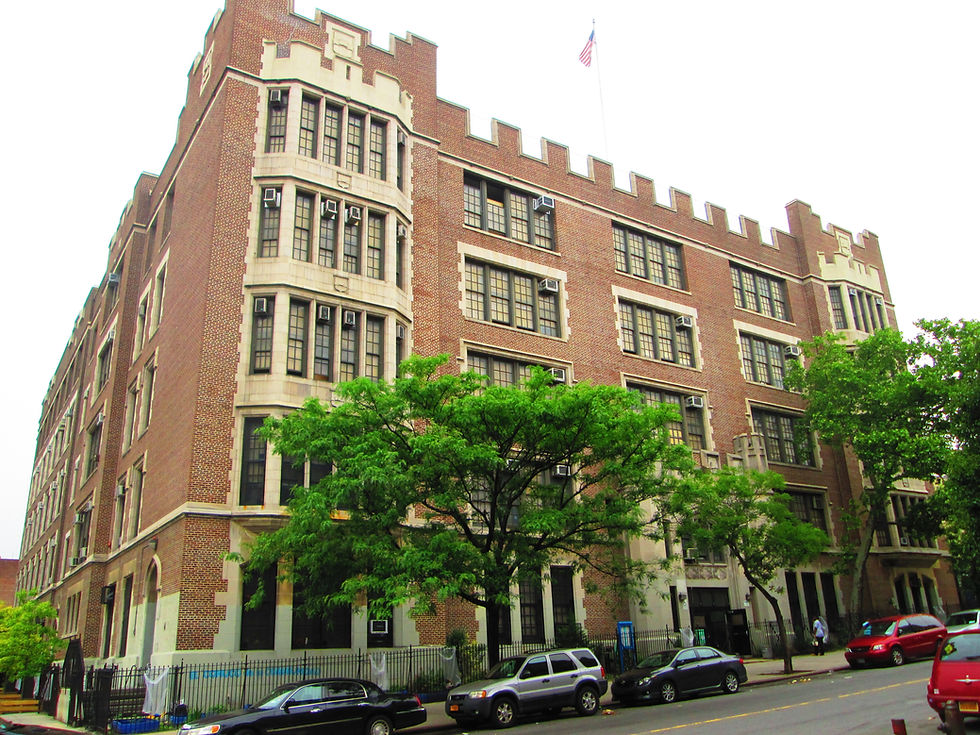
A New York City public school building. Photo: Beyond My Ken / CC BY-SA 4.0. Display size adjusted.
The stated savings are a projection, not money already returned to the city treasury. Officials say they expect to identify unnecessary contracts, rebid work where competition can improve value and manage active agreements more closely. Performance will therefore need to be judged against documented contract changes and future budgets, not solely against the amount announced at the launch.
Procurement is an important but often overlooked part of municipal economics. New York City Public Schools buys an enormous range of services, technology and materials. Rules designed to protect public money can create delays when responsibilities are unclear or systems cannot provide a reliable view of spending. At the same time, speed without oversight can expose taxpayers to weak contracts and vendors to an uneven process.
The overhaul consolidates administrative and school purchasing oversight within the district’s Division of Finance, Administration and Human Resources. It also promises standardized training for employees authorized to make purchases. Those operational details may prove more consequential than the announcement’s largest number because consistent rules and usable systems determine whether savings can recur after an initial review.
For businesses that sell to the school system, predictable timelines and clearer communication could lower the cost of participating in public bids. Vendors often have to plan staffing, inventory and cash flow around government decisions. A process that explains requirements early can help capable smaller firms compete, although the city has not yet published enough implementation data to determine how broadly the benefits will be distributed.
The proposal also has a budget context. An April response from the City Council estimated that competitively bidding contracts, auditing nonessential agreements and adjusting portions of the contract budget could produce even larger savings across fiscal 2026 and 2027. That estimate supports the idea that procurement contains meaningful opportunities, while also showing that different institutions may calculate the potential differently.
Independent local coverage has noted that $100 million is a small share of the school system’s overall budget. That perspective does not make the savings irrelevant; it places them in scale. The stronger measure of success will be whether the city can document reductions without shifting costs elsewhere, cutting necessary services or replacing one cumbersome process with another.
Implementation will unfold over the coming months. The administration says some work is already underway, including contract reviews and the organizational changes surrounding procurement. Replacing old software, establishing transparent deadlines and retraining staff will take longer. Each part creates a point at which the city can publish evidence: processing times, number of competitive bids, contract cancellations and realized savings.
For New York’s business community, the reform is a reminder that public purchasing is itself a market. The school district is a major customer, and changes to its rules affect suppliers far beyond the education sector. If the city follows through, the most valuable outcome may be a procurement system that is easier to audit, easier for legitimate vendors to navigate and less dependent on inherited contracts that continue without sufficient scrutiny. The city should publish a simple public scorecard as the program advances, separating projected savings from amounts actually realized. That would let taxpayers, educators and vendors judge whether faster purchasing and tighter oversight are advancing together rather than trading one problem for another.
Related coverage: New York City's $1.9 Billion Bond Sale Puts Its Borrowing Strategy in Focus, New York's New Business Council Gives 15 Executives a Direct Line to City Hall and Nvidia's $12.93 Billion Hugging Face Deal Puts New York AI at Center Stage.



Comments