New York’s Budget Crisis Threatens to Undercut Ambitious Plans
- Feb 14
- 3 min read
14 January 2026
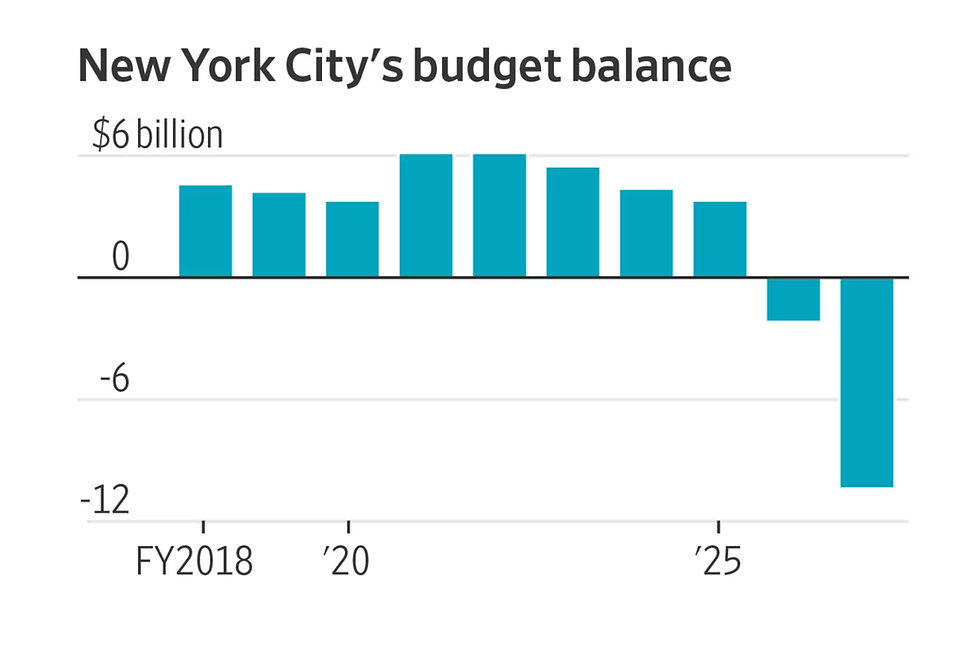
New York City’s newly elected mayor, Zohran Mamdani, entered office with bold promises on affordability, universal services and tax fairness, but he now faces one of the steepest fiscal challenges in the city’s recent history as a looming budget deficit threatens to derail much of his agenda. According to internal forecasts and municipal financial data, the city could confront a shortfall of up to $12 billion over the next two fiscal years, a gap that has put pressure on Mamdani’s team to rethink spending plans and find new revenue streams without sacrificing the progressive policies that helped propel him into office. The city’s projected deficit includes a roughly $2 billion imbalance in the current year’s budget and as much as $10 billion in future years, highlighting the structural difficulties of matching rising costs with available tax revenues and state support.
Mamdani campaigned on an ambitious platform that included expanding free public services, funding universal child care, reducing rent burdens and making public transit more affordable. Many of these policies require significant public funding and, in some cases, approval from the New York State Legislature to enact new taxes on high earners or corporations. In response to the budget pressures, Mamdani has already proposed seeking additional revenue from taxes on wealthy residents and large corporations, along with appeals to state lawmakers for increased financial support from Albany. Initial negotiations have seen some progress, with revised revenue projections from Wall Street bonuses and other sources trimming the projected gap by several billions of dollars, but the challenge remains formidable.
If state support and new taxes on the affluent cannot fully bridge the gap, the mayor’s team has indicated it may have to turn to less popular measures, including drawing down the city’s rainy day reserves and, as a last resort, raising property taxes. A proposal to boost property tax rates by nearly 10 percent is now on the table, a move designed to generate billions in additional revenue but one that has drawn warnings from city lawmakers and watchdog groups who argue such a levy would place an undue burden on homeowners and renters alike. Critics argue that relying on property tax hikes could slow economic activity and exacerbate cost-of-living pressures at a time when many New Yorkers are already struggling with affordability issues.
City budget watchdogs have also urged more aggressive cost containment and spending negotiations to avoid new tax burdens. Observers note that part of the current deficit stems from underestimations by the previous administration of essential costs, including educational mandates and social service programs, which have ballooned in recent years as population needs have grown. Some analysts point to rising housing and public assistance costs as key drivers of the imbalance, alongside expenditures on healthcare, public transit and emergency services that have outpaced revenue growth.
The tension between fiscal reality and political ambition presents a central dilemma for Mamdani. Supporters of his agenda argue that strong public services and affordability measures are essential to the city’s social fabric and economic resilience. They contend that progressive tax policies aimed at the wealthy are not only fair but necessary to sustainably fund robust city programs in the long term. Yet opponents worry that aggressive taxation and rapid service expansions could unsettle middle-class residents and deter business investment at a moment when economic stability is uncertain.
As budget negotiations unfold over the coming months, Albany’s role and the City Council’s appetite for new taxes or spending cuts will be pivotal in shaping the final fiscal plan. For Mamdani, navigating these pressures will be a test of political acumen and a defining moment for his tenure. How he balances ambitious policy goals with the stark fiscal constraints facing the nation’s largest city will determine not only the political fortunes of his administration but the economic wellbeing of millions of New Yorkers.


Comments