Nuveen agrees a £9.9 billion takeover of UK investment firm Schroders
- Feb 12
- 4 min read
12 February 2026
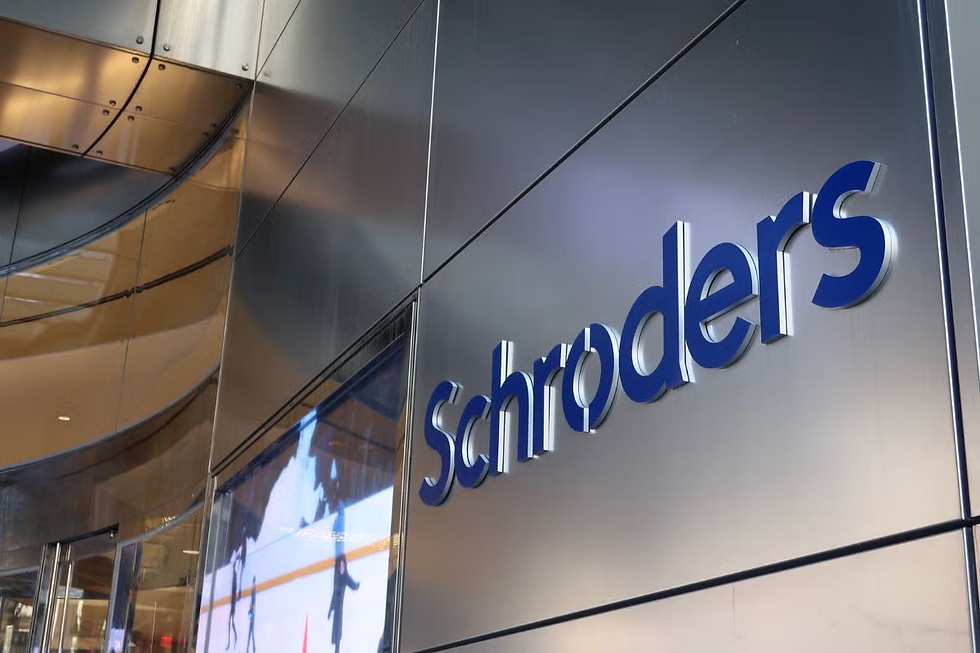
In a move that has sent ripples through global finance, U.S.-based asset manager Nuveen has agreed to buy venerable British investment manager Schroders for approximately £9.9 billion, or $13.5 billion in cash, in one of the largest transactions ever seen in the asset-management sector. The deal, unanimously recommended by Schroders’ board of directors, marks the end of more than two centuries of family-linked independence for the London firm and creates a combined entity managing nearly $2.5 trillion in assets under management. The acquisition stands as a stark illustration of the widening gap between massive U.S. financial institutions and their European counterparts in an industry facing relentless pressure from passive investment products and global consolidation.
Schroders traces its origins back to the early 1800s, evolving from a merchant banking house into one of the United Kingdom’s most respected independent asset managers, with a presence spanning equities, fixed income, multi-asset, advisory and wealth management. The family that founded and guided the firm over generations retained significant influence, holding a nearly 41 percent stake on the eve of the sale and ensuring a continuity of culture and leadership that had become part of the company’s identity. That era concluded with the acceptance of Nuveen’s offer, which values Schroders at a roughly 34 percent premium to its undisturbed share price and has already lifted its stock by nearly 30 percent on European markets.
For Nuveen, the purchase represents a strategic leap forward. The asset management arm of TIAA, a U.S. financial services group long focused on retirement, income and institutional investing, Nuveen brings around $1.4 trillion in existing assets to the table. Combined with Schroders’ roughly $1.1 trillion in client funds, the merged platform will rank among the top ten largest active asset managers in the world, positioned just behind some of Europe’s biggest houses and well behind the colossal U.S. players that dominate the sector. By expanding its footprint in Europe, the Middle East, Africa and Asia-Pacific, Nuveen gains scale and an enhanced distribution network, bolstering its ability to compete with giants such as BlackRock and Vanguard.
The rationale for the deal extends beyond simple scale. In recent years, traditional asset managers have encountered mounting challenges as passive index products and low-cost funds erode margins and siphon investor capital away from active strategies. European firms in particular have faced headwinds as global competition intensifies and regulatory environments evolve. Against this backdrop, consolidation has become both a defensive and offensive strategy to broaden capabilities, diversify product offerings and enhance technological and operational efficiencies. Schroders’ board concluded that partnering with Nuveen offered a compelling path forward, combining complementary strengths while preserving the firm’s heritage and client relationships.
Under the terms of the transaction, Schroders shareholders will receive cash consideration that reflects the premium valuation, with the offer structured to include permitted dividends prior to closing. The transaction is expected to complete in the fourth quarter of 2026, pending regulatory approvals and shareholder agreement, with London remaining the primary non-U.S. headquarters of the combined business and continuing to operate as a significant global hub. Schroders’ long-time CEO Richard Oldfield is expected to remain in his role, reporting to Nuveen chief executive Bill Huffman and helping to steer the integration process as the enlarged firm moves into its next chapter.
The effects of the acquisition are likely to resonate across financial markets. The combination of Nuveen and Schroders’ assets creates a powerhouse with significant scale across public and private markets, from equities and fixed income to private capital, infrastructure and real estate. Such breadth could appeal to institutional investors seeking diversified exposure through a single platform, while also offering wealth clients access to a broader suite of products. Industry analysts suggest that the deal may encourage further consolidation, particularly among mid-sized firms that struggle to keep pace with both the operational demands and competitive pressures posed by larger rivals.
At the same time, the deal underscores a broader shift in the global finance landscape, one in which U.S. firms with deep capital pools and expansive distribution networks increasingly look outward for growth. For London and the United Kingdom more broadly, the sale marks the departure of one of its most storied independent financial institutions, raising questions about the future of Europe’s capital markets and the role of homegrown asset management champions. Although the Schroders brand will be retained and thousands of jobs in London are expected to continue, the transition from independence to ownership by a U.S. parent illustrates the intensifying globalization of financial services in the 21st century.
Critics of such mega-deals sometimes caution that consolidation can diminish competition and reduce local decision-making, particularly when storied names with long domestic histories become part of larger international groups. Supporters counter that scale is critical in a market where technological innovation, regulatory complexity and investor demands require substantial investment. By combining forces, Nuveen and Schroders aim to leverage their collective expertise to offer clients both traditional and alternative strategies, positioning the firm to adapt to evolving market dynamics and regulatory landscapes.
Whether this acquisition will trigger a wave of similar transactions perhaps drawing in other European asset managers remains uncertain. But for now, the deal stands as a landmark event in the business of global finance, highlighting the enduring value of scale and international reach in an increasingly integrated financial ecosystem. Stakeholders on both sides will be watching closely as the combined firm seeks to deliver returns and innovation while preserving the strengths that made each company successful in its own right.



Comments