OnlyFans Owner Leo Radvinsky Dies at 43 Leaving Behind a Billion Dollar Digital Empire
- Mar 23
- 3 min read
23 March 2026
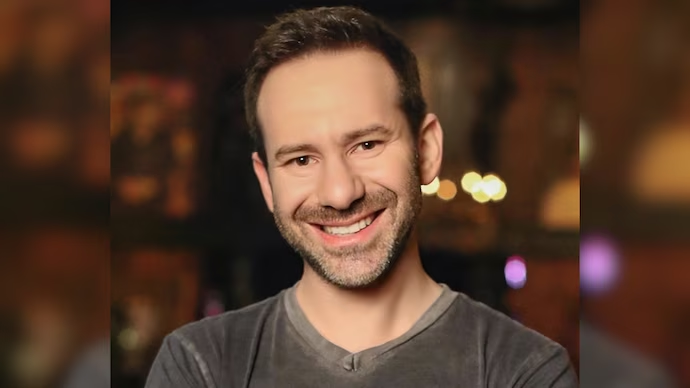
Leo Radvinsky built one of the most profitable and controversial digital platforms of the modern era without ever becoming a public figure himself. Now, his death at the age of 43 marks not just the loss of a reclusive billionaire, but the closing of a chapter in the rapid transformation of the online creator economy.
Radvinsky died after a prolonged battle with cancer, a struggle that remained largely private until it was confirmed by the company he helped turn into a global force. His passing brings sudden attention to a figure who spent years deliberately avoiding it, choosing instead to operate from the background while his business reshaped how content is created, distributed, and monetized.
Born in Odesa, Ukraine, and raised in the United States, Radvinsky’s early life followed a familiar path of technical curiosity and entrepreneurial ambition. He studied economics at Northwestern University, but his real education came from the internet itself, where he began building online ventures at a young age. What started as niche websites eventually evolved into a much larger vision, one that would culminate in his acquisition of OnlyFans’ parent company in 2018.
At the time of that acquisition, OnlyFans was a relatively small subscription platform with limited reach. Under Radvinsky’s ownership, it expanded into a dominant force in digital content, particularly within the adult entertainment industry. The platform’s model was simple but transformative. Creators could charge users directly for access to content, keeping the majority of their earnings while the platform took a percentage.
This structure shifted power away from traditional intermediaries and toward individuals, creating new opportunities for income and independence. Millions of creators joined the platform, and hundreds of millions of users followed, turning OnlyFans into a multi billion dollar business with global influence.
Financially, the results were extraordinary. Radvinsky collected hundreds of millions in dividends annually, building a personal fortune estimated in the billions while maintaining near total ownership of the company. Yet despite that scale, he remained largely invisible, rarely giving interviews or appearing in public, a contrast to the visibility of the platform itself.
That contrast became part of his identity. Radvinsky was often described as a private operator, someone more interested in building systems than in being seen. His approach allowed OnlyFans to grow without a central personality, making the platform itself the focus rather than its leadership.
At the same time, his legacy is inseparable from the debates that surrounded the company. OnlyFans became synonymous with adult content, raising ongoing questions about regulation, financial oversight, and the boundaries of digital expression. While the platform also hosted fitness creators, musicians, and influencers, its association with explicit content defined both its success and its controversy.
In the years leading up to his death, Radvinsky had been exploring options to sell a significant stake in the company, with valuations reaching into the billions. Those discussions now take on new significance, as questions emerge about the future ownership and direction of the platform without its central figure.
Beyond business, there was a quieter side to his life. He contributed to philanthropic causes, including cancer research and humanitarian efforts, reflecting a personal connection that now carries deeper meaning. These efforts, like much of his life, were conducted without public attention, reinforcing the pattern of influence without visibility.
What makes Radvinsky’s story particularly striking is how it reflects the evolution of the internet itself. He operated in a space where traditional rules did not always apply, building a model that redefined how value flows online. In doing so, he created both opportunity and tension, empowering creators while challenging existing systems.
In the end, his death leaves behind more than a company. It leaves behind a framework that continues to shape the digital economy, one where individuals can monetize attention directly and where platforms act as infrastructure rather than gatekeepers.
Radvinsky may have remained out of sight, but his impact is impossible to ignore. The system he built continues to operate, grow, and evolve, even as the person behind it is gone.


Comments