As Global Incentives Rise, U.S. Production Faces Critical Crossroads
- May 31, 2025
- 3 min read
May 17 2025

NEW YORK - In the heart of Los Angeles, the Radford Studio Center stands as a living monument to American television history. From Gunsmoke to Gilligan’s Island and The Mary Tyler Moore Show, its soundstages have long echoed with the legacy of hit series. Perhaps none more iconic than Seinfeld, which taped on Soundstage Nine, a space now steeped in industry lore.
Zach Sokoloff, Senior Vice President at Hackman Capital Partners, which manages Radford and other major studios globally, recalls the studio’s decision to recreate a replica of New York City on its backlot after the 1994 Northridge earthquake. The move was strategic: keeping the Seinfeld production in California rather than risking relocation. “There was trepidation about remaining in LA,” Sokoloff notes. “So we brought New York to the production.”
Three decades later, that same concern looms even larger, not just for one show, but for an entire industry.
Hollywood is no longer the default home for film and television production. From Canada and the U.K. to Australia and Thailand, countries around the world now offer aggressive financial incentives to lure projects abroad. Joe Chianese, SVP of global production consultancy Entertainment Partners, says the trend known as “runaway production” began in earnest in the late 1990s. Since then, he explains, “producers really have a lot of choices. The incentives abroad are competitive, and the impact on local economies is significant.”
Even domestically, U.S. states are vying for entertainment dollars. New York recently boosted its film and TV production incentives by $100 million, bringing the state’s total to $800 million. In New Jersey, Netflix has broken ground on a massive new studio complex at Fort Monmouth, made possible by the state’s generous tax credits.
Yet while competition intensifies, the industry in Los Angeles, still widely regarded as the symbolic home of Hollywood, continues to face multiple headwinds.
According to FilmLA, the city’s primary film permit office, production levels have not recovered from the COVID-19 pandemic or the historic writers' and actors' strikes of 2023. Studios and streaming platforms have simultaneously scaled back on content commissioning, creating a scarcity of new projects.
“With less work to go around, the competition for what's left is intensified,” says FilmLA spokesperson Philip Sokoloski. The challenge is both economic and logistical and it's creating long-term uncertainty across the industry.
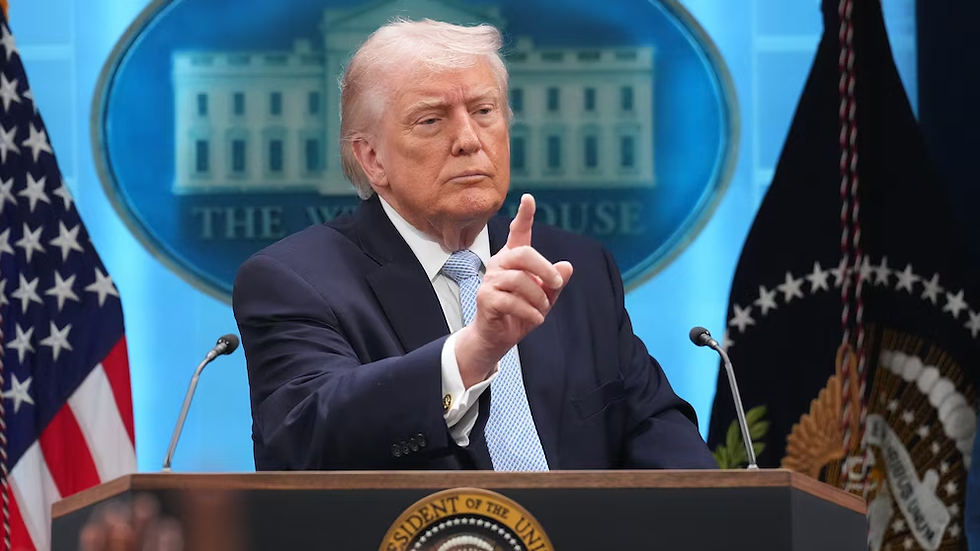
Adding to the volatility, former President Donald Trump recently made headlines with a provocative proposal: a 100% tariff on films made outside the U.S. Shared via his Truth Social platform, the declaration came after a meeting with actor Jon Voight, who has taken on a quasi-ambassadorial role for Trump in Hollywood circles. Voight, alongside actor Sylvester Stallone, later joined industry unions and the Motion Picture Association in urging Trump to pursue federal tax reforms instead aiming to boost domestic production through incentives rather than penalties.
While the proposal may not materialize in its initial form, it reignited a serious conversation about the future of American film and television and the policies that could support its resurgence.
For an industry long seen as a cornerstone of American cultural and economic influence, the current moment represents a critical inflection point. With foreign markets growing more attractive and domestic uncertainties piling up, Hollywood’s grip on global production leadership is loosening.
The path forward, stakeholders argue, lies in strategic investment, meaningful federal support, and a renewed commitment to making the U.S. competitive not just in creativity, but in cost, infrastructure, and long-term sustainability.
In the words of Chianese, “It’s not just about where a show gets made, it's about where jobs are created, where money flows, and which economies benefit.” The cameras may keep rolling, but if the U.S. wants to lead the next era of global storytelling, it must act now to keep productions at home.


Comments