China’s Economy Shows Early Stability in 2026 as Growth Expectations Reset
- Mar 15
- 3 min read
15 March 2026
China has entered 2026 with a sense of cautious stability, offering a steady but measured start to the year that reflects both resilience and restraint. While early economic indicators suggest that the world’s second largest economy is holding its ground, the broader narrative is no longer about rapid expansion but about recalibration, as policymakers and markets adjust to a slower, more deliberate pace of growth.
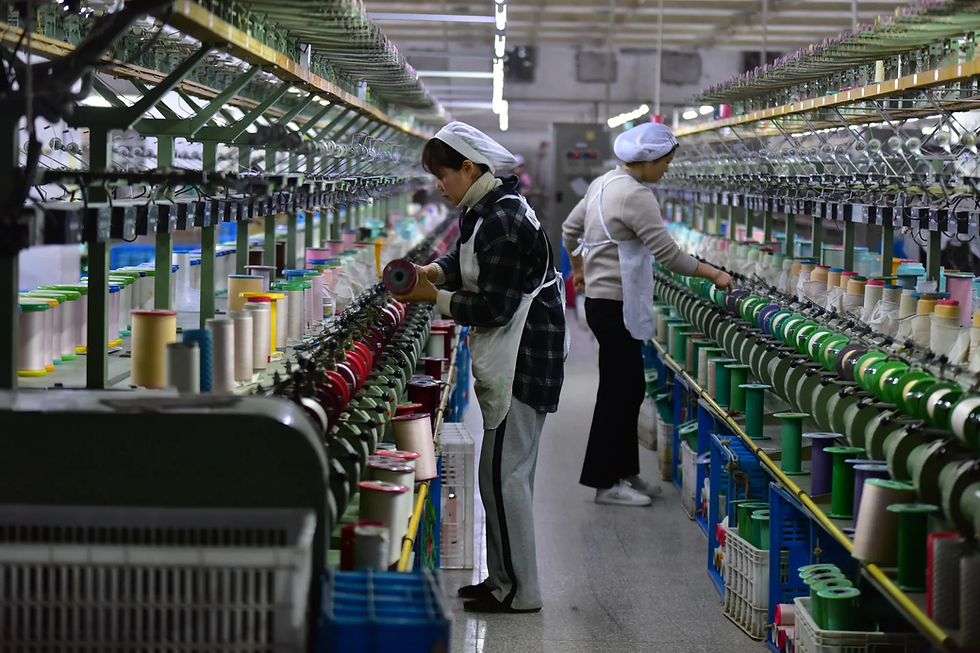
In the first two months of the year, key data points painted a picture of modest momentum. Industrial output rose by 6.3 percent, signaling continued strength in manufacturing, while retail sales increased by 2.8 percent, showing that consumer activity, though still fragile, is beginning to recover. Fixed asset investment also edged higher by 1.8 percent, indicating a gradual return of confidence in infrastructure and development spending.
These figures, while not dramatic, align closely with expectations that have already been lowered. China has set its 2026 growth target at between 4.5 and 5 percent, the most modest goal in decades. This shift is not accidental. It reflects a broader strategy to move away from high speed expansion and toward a model that prioritizes sustainability, stability and long term balance.
Yet beneath the surface of steady growth lies a more complex reality. The property sector, once a major engine of China’s economic rise, continues to struggle. Real estate investment has dropped sharply, and home sales have seen significant declines, weighing heavily on consumer confidence. For many households, property remains a key store of wealth, so its weakness has ripple effects across spending and sentiment.
At the same time, exports have emerged as a critical support pillar. Strong demand for Chinese goods, particularly in manufacturing and technology sectors, has helped offset domestic softness. This reliance on external demand, however, brings its own challenges, including rising trade tensions and vulnerability to global economic shifts.
The government’s response reflects an awareness of these structural pressures. Policymakers are increasingly focused on boosting domestic consumption, recognizing that long term stability will depend less on exports and investment and more on household spending. Efforts to strengthen social safety nets and encourage consumer confidence are part of this broader transition, though progress is expected to be gradual rather than immediate.
Another layer of complexity comes from the global environment. Geopolitical tensions, fluctuating energy prices and shifting trade relationships all add uncertainty to China’s outlook. While the domestic economy has shown resilience so far, external risks remain a constant factor that could influence growth in the months ahead.
The steady start to 2026 also reflects a change in expectations among economists and investors. Rather than viewing slower growth as a sign of weakness, many now see it as part of a necessary transition. By setting more realistic targets, China is giving itself room to address deeper challenges such as local government debt, overcapacity in certain industries and uneven income distribution.
This shift marks a significant moment in the country’s economic evolution. For decades, rapid expansion defined China’s global rise. Now, the focus is shifting toward quality over quantity, with an emphasis on innovation, efficiency and long term sustainability.
Still, the path forward is far from simple. Weak consumer sentiment, a struggling property market and external uncertainties continue to test the limits of this new approach. The challenge for policymakers will be to maintain stability while implementing reforms that reshape the economy from within.
For now, the early months of 2026 suggest that China is managing this balance with cautious success. The growth may be slower, but it is more deliberate, reflecting a system that is adapting rather than accelerating.
In a global landscape defined by uncertainty, that steady footing may prove to be its most valuable asset.


Comments