Federal Reserve's John Williams Says Inflation Remains Too High Despite Signs of Progress

25 June 2026
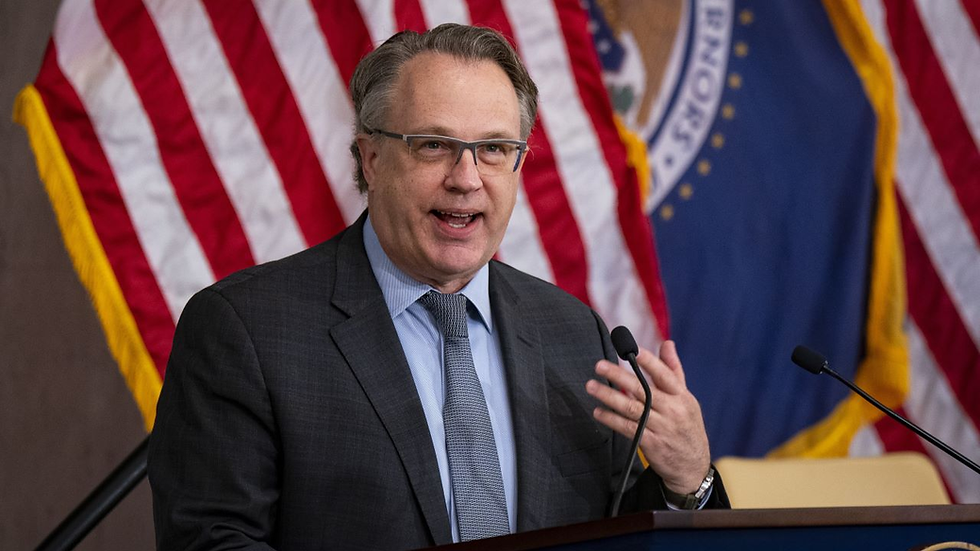
Inflation may be showing early signs of easing, but the battle to restore price stability in the United States is far from over. That was the clear message delivered by New York Federal Reserve President John Williams, who said inflation remains well above the central bank's target even as policymakers believe current interest rate policy is appropriately positioned to gradually reduce price pressures in the years ahead.
Williams' remarks come at a time when investors, businesses, and consumers are closely watching every signal from the Federal Reserve for clues about the future direction of interest rates. Although recent economic data has offered some encouraging developments, persistent inflation continues to present one of the biggest challenges facing the U.S. economy.
Speaking after the Federal Reserve's latest policy meeting, Williams emphasized that restoring inflation to the central bank's long term goal of 2 percent remains an essential priority. He acknowledged that inflationary pressures are expected to moderate over the coming months, but stressed that current price growth remains unacceptably high and requires continued vigilance from policymakers.
The Federal Reserve recently voted to leave its benchmark interest rate unchanged within a range of 3.5 percent to 3.75 percent. The decision reflected the central bank's desire to gather additional economic data before determining whether further policy adjustments may become necessary. According to Williams, the current stance of monetary policy is well positioned to guide inflation lower while allowing officials to monitor evolving risks.
Inflation has proven far more stubborn than many economists anticipated earlier in the year. Data released alongside Williams' remarks showed that the Personal Consumption Expenditures Price Index, the Federal Reserve's preferred inflation measure, increased 4.1 percent over the previous year in May. That figure remains more than double the Fed's official target, reinforcing concerns that price pressures have not yet been fully contained.
Williams nevertheless expressed cautious optimism about the months ahead. He expects inflation to ease to approximately 3.5 percent by the end of this year before continuing its gradual decline. However, he also acknowledged that the path back to the Fed's 2 percent objective will take longer than previously expected. Earlier forecasts suggested inflation could reach target levels in 2027, but Williams now believes that milestone is more likely to occur in 2028.
Several factors could contribute to lower inflation over time. Williams pointed to the fading effects of tariffs that had pushed prices higher, moderating housing costs, and the possibility that disruptions linked to tensions in the Middle East could eventually ease. Together, those developments could help relieve some of the upward pressure on consumer prices.
Despite those encouraging possibilities, Williams also warned that important risks remain. One of the most notable is the rapid expansion of artificial intelligence investment. While AI is widely expected to boost productivity and economic growth over the long term, the enormous demand for advanced computing equipment, semiconductors, and supporting infrastructure may temporarily contribute to higher prices across parts of the economy. Geopolitical uncertainty also continues to pose challenges, particularly if conflicts disrupt global supply chains or energy markets.
Even with inflation remaining elevated, Williams described the broader U.S. economy as remarkably resilient. He expects economic growth to average roughly 2.25 percent annually over the next several years while unemployment gradually declines from its current level of 4.3 percent to around 4 percent by 2028. Those projections suggest policymakers remain confident that the economy can continue expanding even while restrictive monetary policy remains in place.
Financial markets continue carefully evaluating the Federal Reserve's outlook. Although the central bank has paused interest rate increases for now, many investors believe additional tightening remains possible if inflation fails to cool as expected. Others argue that easing price pressures could eventually create room for future rate reductions. Williams avoided offering specific guidance on future policy decisions, emphasizing instead that officials will remain focused on incoming economic data before making any changes.
For consumers, the message remains mixed. Some everyday expenses, including gasoline prices, have begun moving lower, offering households a measure of relief. At the same time, the cost of housing, food, insurance, and many essential goods continues to strain family budgets. That combination explains why many Americans still feel the effects of inflation despite signs of broader economic stability.
Williams' comments ultimately reinforce the Federal Reserve's central objective. Bringing inflation back to 2 percent remains the institution's highest priority, even if the process requires patience and sustained restrictive monetary policy. While encouraging signs have emerged, policymakers believe the fight against inflation is not yet over.
As businesses, investors, and consumers look ahead, the coming months will be critical in determining whether inflation continues its gradual decline or proves more persistent than expected. Until then, the Federal Reserve appears committed to maintaining its current course while carefully balancing price stability with continued economic growth.



Comments