New York’s mayor says booming Wall Street earnings have trimmed the city’s yawning budget gap by roughly $5 billion
- Feb 11
- 4 min read
11 February 2026
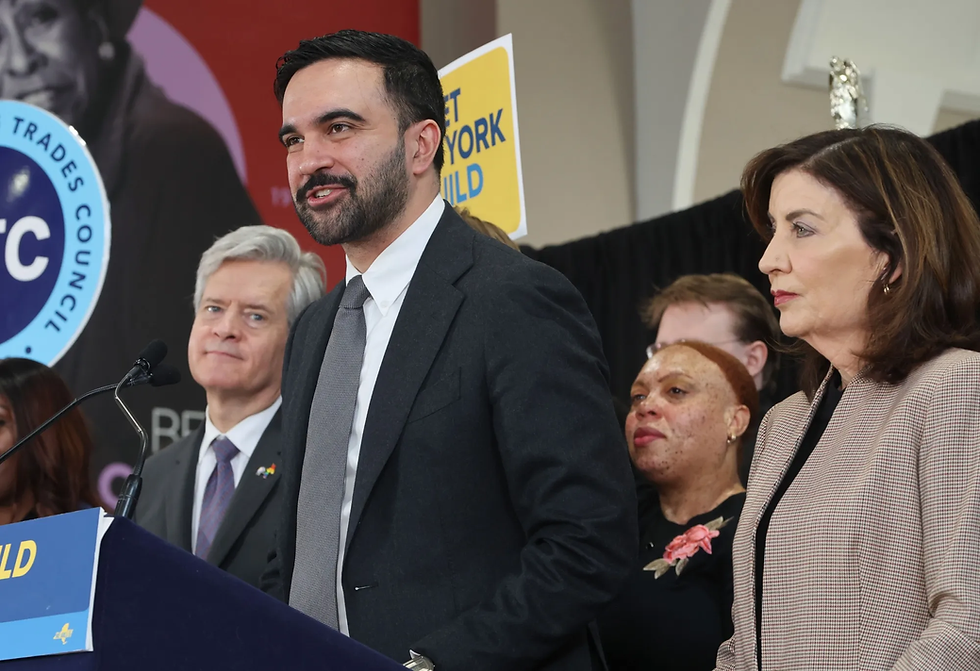
New York City’s newest mayor, Zohran Mamdani, delivered an unexpectedly upbeat fiscal update this week as he laid out his administration’s latest budget projections before state lawmakers in Albany. After inheriting what was initially described as a staggering two-year budget deficit totaling $12 billion, Mr. Mamdani announced that improved revenue estimates largely driven by a banner year for Wall Street bonuses combined with aggressive municipal savings had helped cut that gap roughly in half, relegating the shortfall to about $7 billion over the current and upcoming fiscal years. The mayor made clear that even with this notable improvement, the city still faces a challenging budget battle in the months ahead.
Speaking on what local officials call Tin Cup Day, a traditional occasion for municipal officials to plead their case for state support, Mr. Mamdani framed the new estimates as a testament to both New York’s resilient economy and the necessity of shoring up the city’s finances with structural reforms and targeted tax policy adjustments. In his remarks, he highlighted the outsized role that higher-than-expected payments from Wall Street have played in the updated picture. With financial firms reporting robust bonus pools and a flurry of deal-making, initial estimates of tax revenue from these earnings have jumped significantly, providing a rare boon to New York’s tax coffers at a moment when officials feared deep cuts and service disruptions.
Wall Street’s comeback is emblematic of the broader economic currents reshaping the national economy. The financial sector has benefited from strong stock prices, record-setting initial public offerings and a surge of activity tied to artificial intelligence and sustained consumer demand, all of which have buoyed profits and, by extension, bonus payouts subject to city and state income taxes. With these revenues flowing into municipal accounts, a portion of the previously projected shortfall has effectively been erased on paper. But Mr. Mamdani was quick to caution that the underlying fiscal stress has not disappeared; rather, these windfalls have offered a temporary reprieve that must be coupled with long-term solutions.
The mayor also reiterated proposals to increase taxes on the city’s wealthiest residents and most profitable corporations, policies he championed during his mayoral campaign and reiterated during his Albany testimony. Among them is a proposed 2 percent surtax on personal income for individuals earning more than $1 million annually, an idea Mr. Mamdani described as both progressive and necessary given the city’s current obligations. Alongside this is a push for higher corporate tax rates moving closer to parity with neighboring jurisdictions an effort aimed at ensuring that those best positioned contribute equitably to New York’s economic foundation.
These tax proposals have drawn both praise and criticism. Supporters argue that New York’s wealthiest residents and largest corporations have prospered even as many middle- and working-class families struggle with affordability, and that a modest increase on those at the top could fund services without driving economic harm. Opponents including state officials such as Governor Kathy Hochul have pushed back, emphasizing the importance of maintaining New York’s competitiveness and warning that tax hikes could encourage businesses and high-income earners to relocate to lower-tax states. The governor has underscored her preference for investing in public services without increasing the tax burden, setting up potential tension with the mayor’s legislative requests.
Despite these debates, the improved fiscal outlook offers Mr. Mamdani some political breathing room, at least in the short term. The recalibration from a $12 billion deficit to a much smaller $7 billion gap has caught many by surprise, particularly given how little time Mr. Mamdani has had in office. Municipal analysts have attributed the swing largely to updated revenue projections that incorporated larger Wall Street payouts and more aggressive accounting for in-year cost savings, such as trimming discretionary spending without cutting core services.
Budget directors and economic forecasters caution, however, that relying on volatile sources like financial-sector bonuses can be risky. These revenues can fluctuate sharply with market performance, and a downturn could rapidly erode the gains seen so far. Even so, the current picture allows the mayor and city council to engage in what could be weeks of intense negotiation over the fiscal blueprint for New York’s next two years. A preliminary budget is expected soon, with both sides seeking to balance ambitious service goals with fiscal prudence.
Underneath the fiscal data lies a deeper debate about New York’s trajectory and priorities. Mr. Mamdani campaigned on affordability, pledging to protect vulnerable residents and expand access to essential services such as universal childcare, free bus transit and affordable housing. Achieving these goals against the backdrop of a significant budget gap will require balancing taxation, spending and economic growth in ways that few recent mayors have attempted. The newfound assistance from Wall Street’s tax contribution offers one more tool in that endeavor, but officials acknowledge that broader structural reforms will likely be needed to sustain fiscal health beyond a single fiscal cycle.
As the budget process unfolds, all eyes will be on how the city navigates the trade-offs between revenue generation, service provision and maintaining New York’s magnetism for global talent and enterprise. The influence of Wall Street, already a defining feature of the city’s economy, has once again made itself felt in municipal finances, underscoring the deep interdependence between financial markets and civic budgets. In the end, whether the current projections hold firm or require correction will be a defining test for Mr. Mamdani’s leadership and New York’s broader fiscal resilience.


Comments