Oil Surge and Market Selloff Signal Growing Fear That the Middle East Conflict Could Reshape the Global Economy

29 March 2026
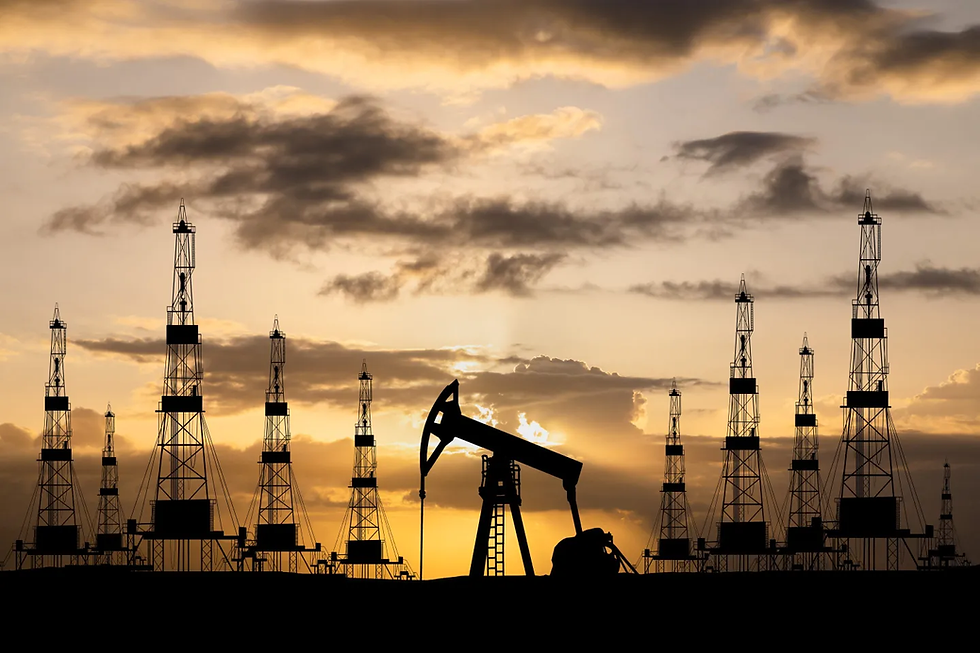
Markets rarely move in isolation. When oil rises sharply and stocks fall at the same time, it usually signals something deeper than routine volatility. This week, that signal has become impossible to ignore. Across global markets, a single concern is driving decisions, a widening conflict in the Middle East that threatens not just regional stability, but the foundation of the global economic system.
Oil prices have climbed aggressively, with benchmark crude rising more than three percent in a single session, pushing Brent crude close to $116 a barrel and U.S. crude above $102. These are not just numbers on a screen. They represent a market reacting to risk, specifically the possibility that supply routes could be disrupted in one of the most critical energy corridors in the world.
At the center of that fear is the Strait of Hormuz, a narrow passage through which a significant portion of global oil supply flows. Any threat to this route immediately sends shockwaves through energy markets, and recent developments have only intensified those concerns.
The response from equity markets has been swift and negative. Across Asia, major indexes have dropped sharply, reflecting investor anxiety about what sustained high energy prices could mean for economic growth. Japan’s Nikkei has fallen, South Korea’s Kospi has declined, and broader regional indexes have slipped as well. The pattern is clear. As oil climbs, confidence falls.
This relationship is not new, but it feels more fragile now. Rising energy costs act like a tax on the global economy, increasing expenses for businesses, raising transportation costs, and ultimately feeding into inflation. For consumers, it shows up in fuel prices and higher costs across goods and services. For governments, it complicates policy decisions that are already balancing inflation against slowing growth.
What makes the current moment particularly tense is the scale of the potential disruption. Analysts warn that if the conflict expands or persists, it could shave up to 1.3 percentage points off economic growth in developing Asia over the next few years. That kind of impact would not remain regional. It would ripple outward, affecting global trade, supply chains, and financial stability.
There is also a shift happening in how investors interpret the situation. Earlier in the conflict, the focus was primarily on inflation. Higher oil prices meant higher costs, which in turn could push central banks to maintain or increase interest rates. Now, the concern is evolving. The focus is moving toward growth, or more specifically, the risk that sustained energy shocks could slow economies more than expected.
This shift is visible in broader market behavior. Investors are moving toward safer assets, pulling back from equities, and reassessing risk exposure. At the same time, volatility has increased, with markets reacting quickly to new developments on the ground.
The uncertainty is amplified by the nature of the conflict itself. It is not contained to a single front or a clearly defined timeline. Involvement from multiple actors, disruptions to shipping routes, and the potential for escalation all contribute to a sense that the situation could change rapidly.
There is also a psychological layer to the market reaction. Energy crises have historically been linked to broader economic downturns, from the oil shocks of the 1970s to more recent disruptions. That historical memory shapes how investors respond today, often amplifying movements as they anticipate worst case scenarios.
For policymakers, the situation presents a difficult challenge. Central banks must navigate the tension between rising inflation driven by energy prices and the risk of slowing growth. Governments must consider how to stabilize markets without overreacting to short term volatility.
Meanwhile, businesses are left to adapt. Companies reliant on energy inputs face higher costs, while those tied to global supply chains must contend with potential disruptions that extend beyond pricing.
In the end, the current market movement is not just about oil or stocks. It is about connection. The link between geopolitics and economics, between conflict and cost, between uncertainty and decision making.
What is unfolding is not just a market reaction, but a reflection of how deeply interconnected the global system has become. A disruption in one region now carries immediate consequences across continents. And as long as that disruption continues, markets will remain on edge, moving not just on data, but on the direction of a conflict that has yet to find its limits.


Comments