Silver Soars Past $75 an Ounce, Extending a Record Rally That Has Redefined the Precious Metals Market
- Dec 26, 2025
- 4 min read
26 December 2025
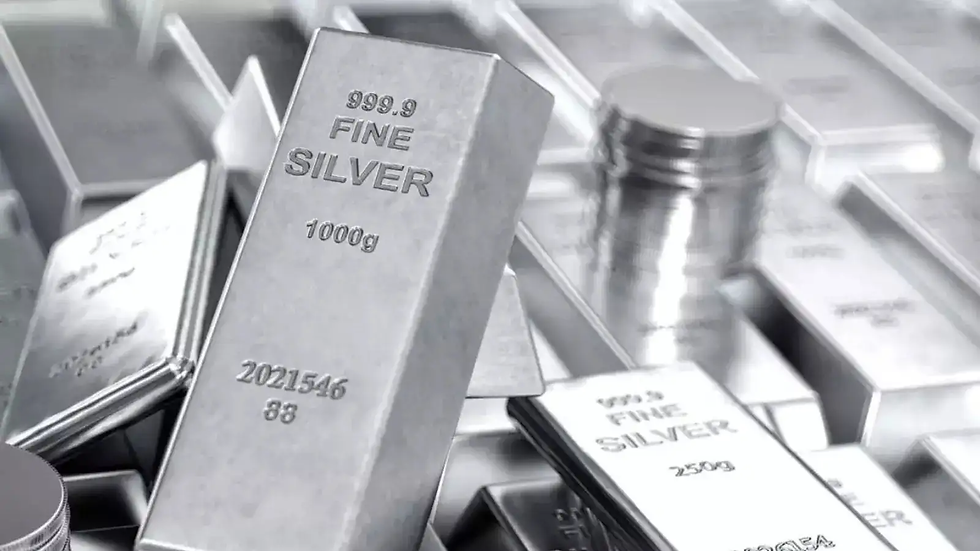
In the closing days of 2025, silver achieved a milestone that few market watchers expected at the start of the year, surging past $75 an ounce for the first time in history and extending a remarkable rally that has made the white metal one of the standout performers across global financial markets. Spot silver climbed as high as $75.14 during trading on December 26 and was trading up more than 3.5 percent as it approached that level, a dramatic advance supported by a convergence of factors that have driven both investment demand and industrial usage to historic heights. The rally has captured the attention of investors around the world, from bullion banks and hedge funds to everyday traders, and has reshaped discussions about the role of precious metals in portfolios as expectations of U.S. interest rate cuts and heightened geopolitical uncertainty continue to fuel demand for safe-haven assets.
Silver’s ascent to $75 and beyond is the culmination of months of sustained buying pressure that has seen the metal surpass multiple previous records. The momentum picked up significantly in December, following a period in which silver had already climbed past the long-watched $70 mark, reflecting a potent mixture of investor enthusiasm and underlying economic dynamics. Industrial demand for silver remains robust, with applications in sectors ranging from renewable energy technologies to electronics and data centers. These demand drivers have combined with tightening inventories, creating a market environment in which supply struggles to keep pace with both speculative inflows and real demand from industrial users.
At the same time, macroeconomic expectations have played a major role in silver’s rally. Traders and analysts have increasingly priced in the prospect of U.S. monetary easing in 2026, with the possibility of interest rate cuts by the Federal Reserve lifting the appeal of non-yielding assets such as precious metals. Lower interest rates reduce the opportunity cost of holding metals like silver, which do not generate cash flows, making them more attractive to investors seeking alternatives to bonds and other yield-bearing instruments. Geopolitical tensions around the world have further bolstered silver’s safe-haven status, encouraging investors to increase their exposure to assets perceived as stores of value in uncertain times.
The broader landscape of precious metals also reflects this late-year surge. Gold, traditionally seen as the premier safe-haven asset, pushed to all-time highs above $4,500 an ounce as part of the same market dynamic that powered silver’s gains, while platinum and palladium also climbed amid tightening supplies and robust industrial demand. The contemporaneous strength across multiple metals pointed to a pervasive shift in investor sentiment as year-end approached and market participants recalibrated their expectations for global growth, monetary policy and risk appetite.
For many observers, silver’s performance in 2025 has been nothing short of extraordinary, particularly when viewed in the context of its performance earlier in the year. At the start of 2025, prices were materially lower, but a combination of structural and cyclical factors has propelled silver to the forefront of the commodities complex. Some analysts have pointed to structural deficits in the silver market where global demand outstrips mine production and recycling by significant margins as a key underpinning of the rally, especially as demand for technologies like photovoltaics and electric vehicles continues to grow. Others highlight the speculative element, where momentum-driven flows have amplified price moves, particularly in markets with relatively thin liquidity around the holiday season.
Despite the surge, silver’s dramatic climb has also introduced heightened volatility. After reaching record levels, prices briefly softened in the final week of December amid reactions to higher margin requirements imposed by exchanges like the Chicago Mercantile Exchange, which were intended to temper speculation and ensure that traders hold sufficient capital against extreme price swings. These moves triggered quick sell-offs in precious metals futures, underscoring the delicate balance between bullish fundamentals and short-term market mechanics. Nevertheless, even after such pullbacks, silver’s price remained elevated relative to its historical norms, and the overall trend for the year was unmistakably upward.
The broader implications of silver’s rally extend beyond financial markets. Economists and industry participants point out that higher silver prices can have real effects on industrial production costs, particularly in sectors that rely heavily on the metal’s conductive, reflective and antimicrobial properties. Solar panel manufacturers, electronics producers, and other heavy users of silver may find input costs rising, a reality that could spur both innovation in recycling and alternative materials as well as pressure on margins if elevated prices persist into 2026.
Looking ahead, many market watchers believe that silver’s performance in 2025 may not be an isolated event but part of a broader revaluation of precious metals in a world of shifting monetary policy, geopolitical uncertainty and accelerating demand for clean energy technologies. Some analysts have suggested that silver could move even higher if interest rates do indeed ease, while others caution that the metal’s dual role as both an industrial commodity and an investment asset makes it susceptible to sharp corrections should macroeconomic conditions change. Regardless of the precise trajectory, silver’s milestone surpassing of $75 an ounce is likely to be remembered as one of the defining market stories of 2025, illustrating how quickly investor preferences and market structures can evolve in response to global events and economic expectations.


Comments