U.S. Trade Deficit Falls to Its Lowest Level Since 2009 as Imports Slide Sharply
- Jan 8
- 4 min read
8 January 2026

In a development that surprised economists and caught the attention of financial markets, new government data released in early January revealed that the United States’ trade deficit shrank dramatically in October to its lowest level in more than 15 years, a change driven by a sharp drop in imports and a modest rise in exports that together point to shifting trade patterns and uneven domestic demand as the U.S. economy headed into the final stretch of 2025.
The overall gap between what the United States buys from abroad and what it sells overseas narrowed by a stunning 39 percent compared with the prior month, falling to $29.4 billion, the smallest deficit since June 2009, according to data from the Commerce Department’s Bureau of Economic Analysis and Census Bureau. That figure was far below forecasts from economists, who had expected the trade shortfall to widen to nearly $59 billion, and it helped reshape expectations for how trade might influence broader economic performance in the final quarter of the year.
At the center of this shift was a steep decline in imports, which fell by 3.2 percent to $331.4 billion in October, the lowest level since mid-2023. Goods imports a subset that includes manufactured products, raw materials and other tangible items dropped 4.5 percent to $255 billion, suggesting that U.S. businesses and consumers were pulling back on purchases from overseas suppliers. This contraction in imports was widely interpreted as a sign of softening domestic demand, a development that could temper future inflationary pressures but also raise questions about the underlying strength of the U.S. economy late in the year.
Some analysts have pointed to the impact of sweeping tariff measures implemented by the U.S. government throughout 2025 as a key factor in the changing trade picture. Broad tariffs on a wide range of imported goods, which were part of the administration’s effort to reduce persistent trade deficits and encourage domestic production, appear to have discouraged certain types of inbound shipments, including pharmaceutical products and industrial supplies. In October, imports of industrial supplies dropped to their lowest level since early 2021, driven in part by a decrease in non-monetary gold imports, which are excluded from the nation’s official gross domestic product calculations. At the same time, consumer goods imports particularly pharmaceuticals plunged sharply, reaching the lowest levels seen since mid-2020.
Alongside the decline in imports, total exports rose by 2.6 percent to a record $302 billion in October, marking one of the rare occasions in recent years when selling goods and services abroad outpaced purchases from overseas. This increase was aided by stronger shipments of non-monetary gold and other precious metals, while exports of consumer goods including pharmaceuticals actually fell. Exports of services, such as travel and financial services, also reached highs not seen before, reflecting continued global demand for U.S. service-oriented economic activity.
The narrowing of the trade deficit also extended to the goods-only balance, which saw its gap shrink by **24.5 percent to $59.1 billion, the lowest monthly figure since March 2016. This narrower goods deficit illustrates the degree to which foreign demand for certain U.S. products is rising even as inbound purchases slow, and it underscores the multifaceted nature of international trade flows that are influenced not only by tariffs but by global commodity prices, currency movements and shifting supply-chain strategies.
Economists remain cautious about interpreting these figures as a straightforward indicator of broad economic strength. While a smaller trade deficit can contribute positively to gross domestic product particularly when exports are increasing much of the recent movement reflects short-term swings in specific commodity categories such as gold and pharmaceuticals rather than sustained growth in manufactured goods or services across the board. Indeed, some analysts note that volatile movements in gold trading can magnify trade figures without indicating durable trends in underlying economic activity.
Moreover, the drop in imports, while helpful in shrinking the trade gap, may signal weaker demand from U.S. consumers and businesses at a time when economic growth is expected to slow from the robust expansions seen earlier in 2025. If the trend of declining imports continues, it could reflect broader challenges in consumer confidence or investment appetite that merit close attention from policymakers and corporate planners alike. Markets and economists will be watching closely as more comprehensive data becomes available for subsequent months.
The October trade figures were released with a delay owing to a prolonged government shutdown that began in the fall of 2025, creating gaps in economic data reporting that economists have had to navigate carefully. Despite this delay, the magnitude of the deficit contraction has already begun to influence forecasts for overall economic performance. For example, the Atlanta Federal Reserve’s GDPNow model, an estimate of real GDP growth from available data, suggested that net exports could contribute positively to fourth-quarter GDP growth, even as other factors such as consumer spending and business investment fluctuate.
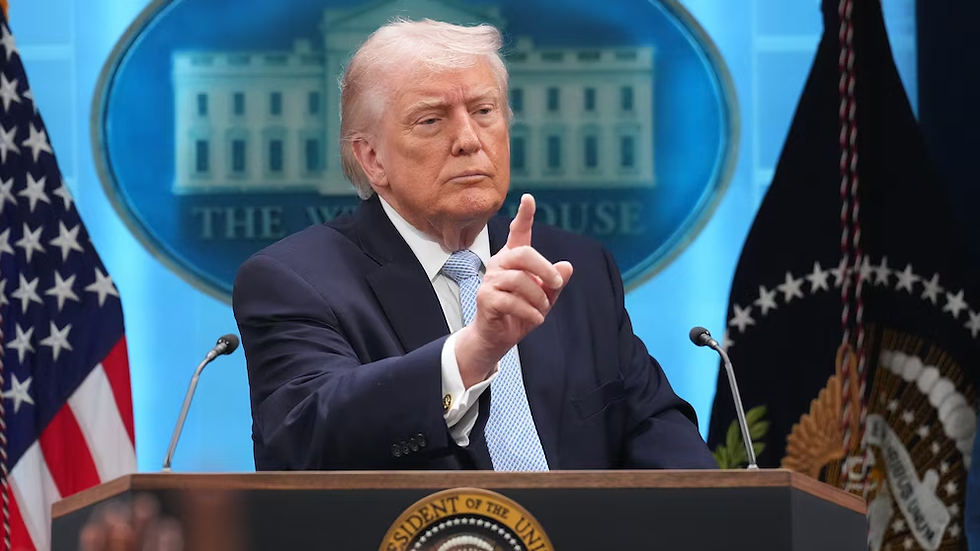
President Donald Trump’s trade policies, which placed a heavy emphasis on reducing trade deficits through tariffs and reciprocal trade measures, have loomed large in discussions of the October data. The so-called “Liberation Day” tariffs announced in April 2025 imposed broad levies on a wide range of imported goods and have been credited by some observers with reshaping trade flows in a way that narrows the deficit. However, these policies have also generated uncertainty among global trading partners and raised concerns about retaliatory measures and potential disruptions in supply chains that could impact U.S. companies in the future.
Looking ahead, investors, policymakers and business leaders will be watching whether the trend of shrinking deficits and softening imports continues or whether it represents a temporary adjustment tied to specific industries and tariff effects. If the narrower trade gap persists, it could support arguments for a more balanced international trade stance and provide a modest lift to economic growth in the coming quarters, particularly if exports continue to find strength abroad. At the same time, sustained weakness in imports could highlight underlying challenges in domestic demand and broader consumer sentiment that extend beyond trade alone.
For now, the October trade data offers a snapshot of a complex and evolving trade environment in which tariffs, global demand shifts and sector-specific dynamics are all playing a role in shaping the United States’ position in the global economy as 2026 begins.


Comments