UK Grocery Inflation Falls to Lowest Level Since October 2024

18 August 2026
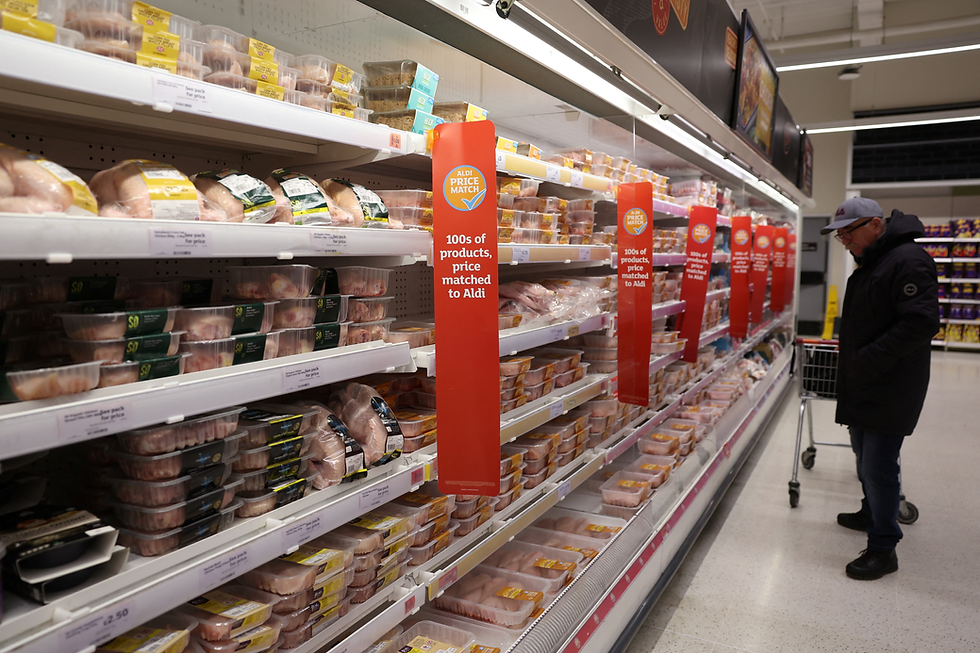
British households received another sign of relief from the cost of living squeeze in August as grocery price inflation slowed to its lowest level in nearly two years, suggesting that intense competition among supermarkets is helping keep food prices under control.
New figures from market researcher Worldpanel by Numerator showed that like-for-like grocery inflation stood at 2.1 percent during the four weeks ending August 9. That marked a noticeable decline from 2.6 percent in the previous report and 3.0 percent in the period before that.
The latest reading represents the lowest level of grocery inflation recorded since October 2024 and provides an early indication that pressure on household food budgets is continuing to ease.
The improvement comes after earlier concerns that British food prices could rise sharply during 2026. Higher energy costs and uncertainty surrounding the conflict with Iran had created fears that transportation, manufacturing and agricultural expenses would eventually reach supermarket shelves.
So far, however, those predictions have largely failed to materialize. Fierce competition among Britain's major supermarket chains has encouraged retailers to keep prices attractive, while consumers have become increasingly resistant to paying more for everyday products. Improved hedging strategies among suppliers have also helped businesses manage volatile costs.
Promotions have become particularly important for shoppers looking to stretch household budgets. Worldpanel reported that 31.3 percent of grocery spending during the latest four-week period involved products sold through some form of promotional deal.
Overall grocery sales increased 2.5 percent compared with the same period a year earlier, indicating that consumers continued spending even while remaining focused on value.
Britain's unusually warm summer also influenced what shoppers placed in their baskets. Sales of sun cream jumped 58.4 percent compared with the previous year, while ice cream and sorbet sales increased 26.1 percent as households responded to the hot weather. Competition between Britain's largest grocery retailers remained intense during the 12 weeks ending August 9.
Tesco, the country's biggest supermarket group, recorded sales growth of 1.8 percent compared with the previous year. However, its share of the grocery market edged lower for a third consecutive reporting period. Sainsbury's performed more strongly, with sales increasing 3.5 percent.
Marks & Spencer continued to stand out among Britain's food retailers. Although the company is not completely represented within Worldpanel's dataset, its grocery sales increased 15.9 percent, making it the fastest-growing food retailer covered by the report.
Online supermarket Ocado followed with growth of 13.1 percent, while discount chain Lidl recorded an 8.5 percent increase. Asda remained under pressure, with sales declining 0.2 percent. Even so, the result represented the retailer's strongest performance since March 2024, offering some encouragement as it works to improve its position in the highly competitive supermarket industry.
The easing in grocery inflation could provide welcome support for Britain's new government. Prime Minister Andy Burnham has made reducing cost of living pressures a central priority as households continue dealing with the cumulative effect of several years of higher prices.
Lower inflation does not mean grocery prices are returning to their previous levels. Instead, it means prices are increasing more slowly. Families are therefore still paying considerably more for many everyday essentials than they were several years ago.
Still, the direction will be welcomed by consumers. With supermarket competition remaining fierce and shoppers increasingly searching for promotions, retailers have strong incentives to avoid unnecessary price increases.
The August figures suggest that Britain's grocery market may finally be entering a more stable period after years of sharp price increases. For households accustomed to watching the cost of their weekly shopping climb, even a slower pace of inflation represents meaningful relief.



Comments