Hong Kong's First Five-Year Plan Tries to Build a Broader Business Engine

HONG KONG — Hong Kong has published the first five-year economic and social plan in its history, a 2026–2030 blueprint that aims to reinforce the city's financial strengths while building a broader identity around technology, trade, education and regional integration. Chief Executive John Lee presented the plan to the legislature Wednesday, placing long-range targets at the center of a business model long associated with limited government intervention and market-led decisions.
The government describes the document as strategic and directional rather than a command economy. That distinction matters. Hong Kong is not replacing private investment decisions with production quotas. It is trying to coordinate policy, infrastructure and capital around a set of priorities aligned with China's national development strategy. Companies will judge the plan by whether that coordination removes bottlenecks or adds another layer of direction to an already complex market.
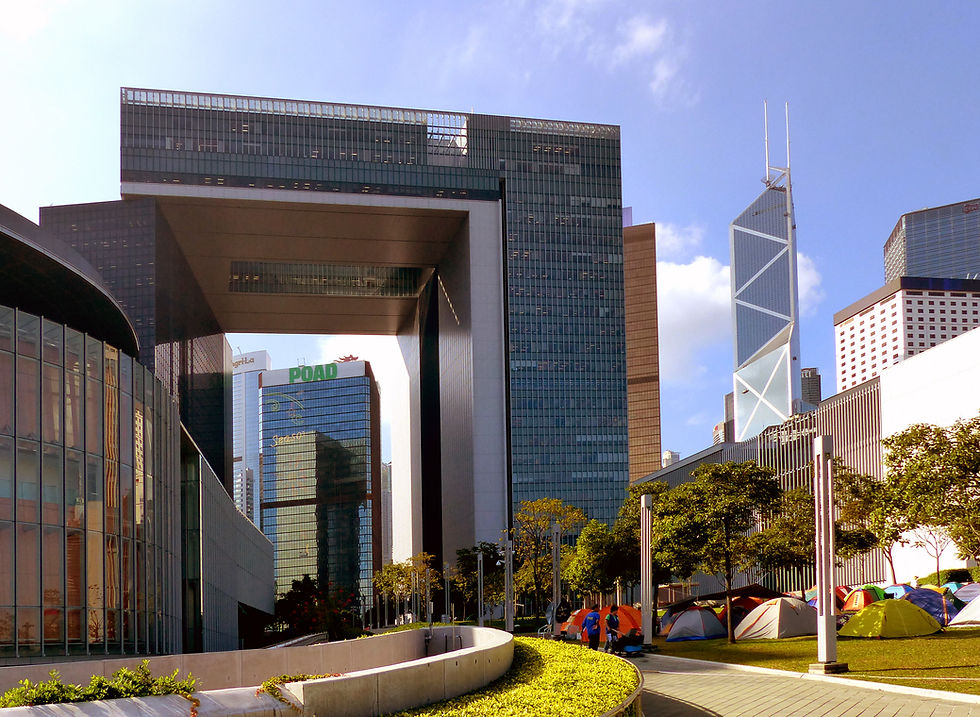
Finance remains central. The plan calls for a stronger offshore renminbi market, deeper wealth and risk-management businesses, expanded fixed-income activity and further development of commodities and digital-asset infrastructure. Those goals build on Hong Kong's role as a channel between mainland capital and international investors. They also recognize that listing volume alone cannot define a modern financial center when competition increasingly turns on products, settlement systems, data and cross-border access.
Technology is the second major engine. The blueprint emphasizes artificial intelligence, life and health sciences, microelectronics and advanced manufacturing, while supporting five public research institutions. The Northern Metropolis and technology parks are expected to connect laboratories, companies and talent more closely with Shenzhen and the wider Greater Bay Area. The commercial test will be whether research produces scalable companies and well-paid jobs rather than remaining concentrated in grants and buildings.
Trade policy is also moving beyond the traditional image of goods passing through a port. The plan encourages manufacturers, logistics companies and technology businesses to place higher-value functions in Hong Kong, including international orders, foreign exchange, trade finance and supply-chain management. That approach treats the city as a control tower for regional commerce. It could create durable service revenue even when physical production occurs elsewhere.
The breadth of the plan responds to a real vulnerability. Finance and property generate enormous value, but they can leave the economy exposed to market cycles and affordability pressure. Hong Kong's recent business-outlook survey showed companies balancing cautious demand with investment in productivity. A successful five-year plan would not eliminate those cycles; it would give employers more ways to grow when one sector slows.
Talent and higher education are therefore presented as business infrastructure. The government wants universities to attract researchers, commercialize intellectual property and deepen links with industry. Visa policy, housing and quality of life will matter as much as laboratory funding. Global specialists compare entire ecosystems. A generous package loses force if families view schooling, space or career mobility as uncertain.
The plan also extends the logic behind the city's expanding fixed-income ambitions. Long-term capital from pension funds, insurers and wealth managers can finance infrastructure and innovation if the market offers suitable products and transparent rules. Tokenization and digital settlement may lower friction, but technology does not remove credit risk. Regulators will need to preserve disclosure and investor protection while experimenting with new market plumbing.
Critics will see political symbolism in adopting the planning language used by Beijing, and the Associated Press noted the contrast with Hong Kong's historical preference for minimal intervention. That concern cannot be dismissed by branding. Officials will have to publish measurable milestones, disclose trade-offs and show that companies can still challenge assumptions. A plan gains credibility when it can be evaluated, not merely praised.
The most important question is execution. Hong Kong already possesses global banks, active capital markets, universities, transport links and proximity to one of the world's largest manufacturing regions. The five-year plan attempts to make those assets operate as one system. By 2030, success will be visible in company formation, private investment, productivity, research commercialization and household opportunity. If those outcomes do not improve, the document's ambition will not be enough.
For investors, the blueprint is best read as a map of where policy attention and public resources are likely to concentrate. It is not a guarantee that every favored industry will prosper. The opportunity lies in understanding which projects solve real commercial problems and which depend mainly on official momentum. Hong Kong is trying to broaden its business engine without abandoning finance. The next four years will show whether strategy can become competitive advantage.


Comments