UK Business Growth Slows as September Price Pressures Build

LONDON — Britain's private sector continued to expand in September, but the pace weakened as service companies reported faster price growth. The preliminary composite purchasing managers' index fell to 51.7 from 52.5 in August, remaining above the 50 line that separates expansion from contraction. The reading was also below economists' expectation of 52.0, according to a Reuters poll.
Services, which dominate the UK economy and London's employment base, expanded more slowly than expected. Survey measures also showed prices charged by service businesses rising at the fastest pace in four months. That combination is awkward: activity is still growing, yet inflation pressure has not disappeared. It gives the Bank of England less room to treat softer momentum as a straightforward argument for lower rates.
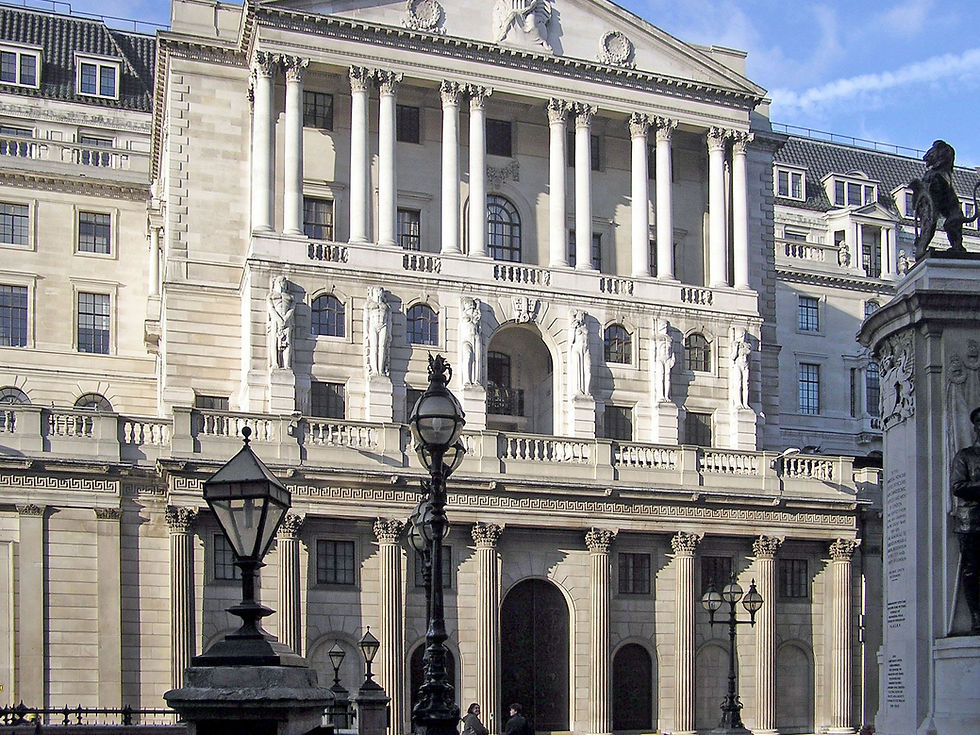
London businesses are watching the mix of slower growth and firmer price pressure. Photo: Adrian Pingstone / Public domain. Display size adjusted.
Manufacturing offered a firmer counterpoint, with the headline factory PMI reported at 52.0. Even so, one relatively strong manufacturing reading does not erase the weight of services in British output. For London, the important question is whether professional services, hospitality, finance and consumer-facing firms can sustain demand while wages, rent and other operating costs remain elevated.
The survey is an early estimate based on responses collected before the month ends, so it can be revised. It should not be read as a complete measure of the economy. Purchasing managers' indexes are useful because they arrive quickly and capture business conditions, but they describe direction and sentiment rather than providing the final level of national output.
For the Bank of England, the details matter more than the headline. Policymakers recently kept rates unchanged, emphasizing the need to see durable evidence that inflation is returning to target. Faster service-sector price increases can reinforce caution because services inflation is often tied to domestic wages and costs, rather than imported energy prices that may reverse quickly.
Companies face a different calculation. Slower growth can make it harder to pass higher costs to customers, compressing margins even when sales remain positive. Businesses with thin cash buffers may postpone hiring or investment. Larger groups may use the period to renegotiate suppliers, automate processes or concentrate spending on products with clearer returns.
The reading also lands before important fiscal decisions, adding to uncertainty around taxes, spending and consumer confidence. London firms sell across the country and abroad, but many still depend on domestic demand. A cautious household can reduce restaurant visits, retail purchases and discretionary services long before an official recession appears in the data.
International investors will compare the UK's growth-inflation mix with the United States, euro area and Asia. Sterling, government bonds and rate expectations can move when surveys alter the perceived path of monetary policy. The September numbers are not severe enough to signal a sudden downturn, but they narrow the comfortable middle ground in which growth improves while inflation cools.
Managers should watch the final PMI release, official inflation figures and labor-market data rather than building a plan around one survey. New orders and employment will show whether the slowdown is temporary or beginning to affect staffing. Price components will indicate whether the latest increase reflects a brief adjustment or a broader return of service inflation.
September's message is therefore mixed rather than dramatic. Britain is still expanding, manufacturing has resilience and the economy is not flashing a clear contraction signal. But softer services growth and stronger pricing pressure make the next decision harder for both the Bank of England and London boardrooms. The most important risk is not an immediate collapse; it is a prolonged period in which growth remains modest while costs refuse to settle.
That risk rewards disciplined planning rather than alarm. London companies can test budgets against several rate and demand scenarios, protect essential investment and avoid assuming that price increases will be accepted automatically. The data may improve next month, but firms do not need to predict the exact turn to prepare. They need current information, manageable debt and enough flexibility to respond if customers or financing conditions change.
Related coverage: Why New York, London and Hong Kong Still Lead Global Finance, Bank of England Holds Rates as Inflation Risks Revive Talk of a Hike and Bank of England Faces a Harder Rate Choice as UK Inflation Climbs.



Comments